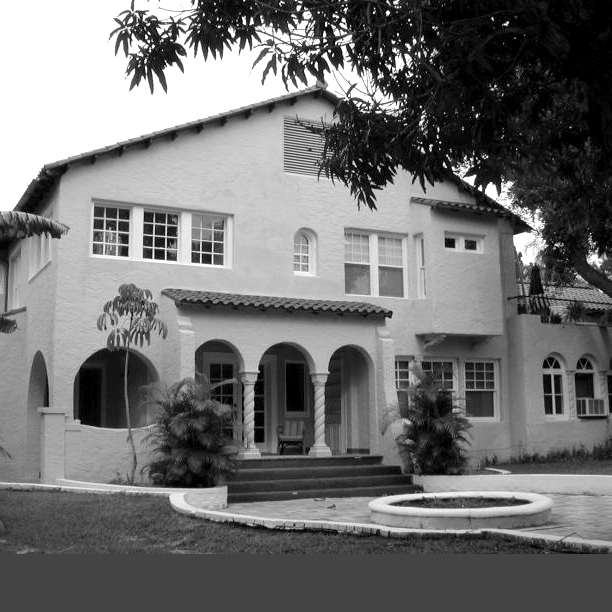
St. Petersburg’s 1920s building boom left behind a variety of architectural styles that continue to shape the city’s historic neighborhoods. One example is the Wellington Lake House, located at 619 65th Street South.
Dating to approximately 1927, the house is a fine example of Mediterranean Revival architecture, a popular style during Florida’s Boom Era. Inspired by the architecture of Spain and the Mediterranean region, the style brought decorative details and Old World influences to buildings throughout Florida.
The Wellington Lake House retains several features characteristic of this architectural style. Its tile roof and Mission-style parapets create a distinctive roofline, while spiral-fluted pilasters topped with Classical capitals add decorative detail to the exterior. A cartouche and an ornamental entrance further contribute to the home’s architectural character.
These features are more than decoration. They reflect the design preferences of a period when St. Petersburg was experiencing rapid growth and new residential construction. Mediterranean Revival architecture helped give many Florida communities a distinctive appearance, blending elements of traditional European design with the aspirations of a growing state.
Today, the Wellington Lake House offers a reminder of the architectural character that emerged during St. Petersburg’s 1920s development. Its surviving details help tell the story of a city growing, building, and establishing the visual identity that remains part of its historic landscape.
Share Article: