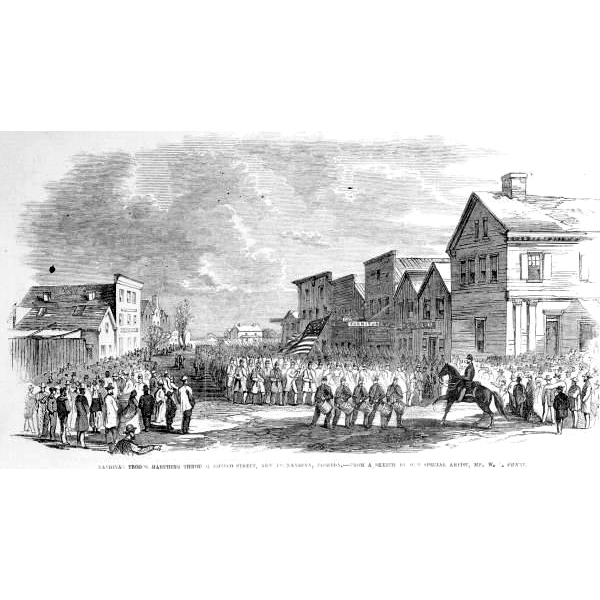
On November 3, 1862, Fort Clinch stood within a changing landscape of war and emancipation along Florida’s northeastern coast. Since Union forces took control of the fort (pictured) and nearby Fernandina earlier that year, Amelia Island had become a refuge for people escaping slavery and a base for Union military operations. The region also became part of the emerging history of Black military service during the Civil War.
The regiment had begun forming earlier that year under the direction of Union General David Hunter. Its soldiers were formerly enslaved Black men who had reached Union-controlled territory. Although the regiment initially faced uncertainty over its official status, it became one of the earliest Black military units organized during the war.
Amelia Island and nearby Fernandina held strategic importance for Union forces. After capturing the area in March 1862, the Union established a presence that made it a refuge for people fleeing slavery. Black soldiers operating along the coast helped expand these opportunities for freedom while disrupting Confederate resources and operations.
The sight of Black men serving as armed Union soldiers challenged assumptions about race, citizenship, and who could serve in the military. Their service also demonstrated the determination of African Americans to fight for their freedom and help shape the nation’s future.
The regiment’s work helped lay the groundwork for broader Black enlistment in the Union Army. President Abraham Lincoln’s Emancipation Proclamation, which took effect on January 1, 1863, explicitly called for the acceptance of Black men into the armed forces. By the end of the war, approximately 180,000 Black men had served as soldiers in the United States Army.
The story of the 1st South Carolina Volunteers reminds us that Florida’s Civil War history includes not only military occupation and conflict, but also the courage of people who fought for freedom and helped transform the meaning of military service.
Share Article: