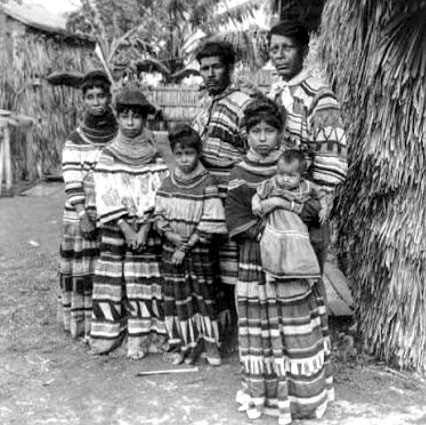
The ancestors of today’s Seminoles included Muscogee-speaking peoples whose communities were located primarily in present-day Alabama and Georgia. Beginning in the 1700s, groups migrated into Florida, seeking new hunting grounds, trade opportunities, and greater independence. In Florida, they also joined with other Indigenous peoples and people seeking freedom from slavery.
The origin of the name Seminole is equally complex. Spanish colonists used the word cimarrón, meaning “runaway” or “wild,” for people and animals living beyond their control. Muscogee-speaking people in the Southeast adopted the Spanish term, transforming it into simanó-li or simaló-ni. The Muscogee term translates as “those that camp at a distance.” Over time, the terms cimarrón and simanó-li merged into the English word “Seminole.”
The Seminole Tribal Historic Preservation Office notes that the name was initially applied by outsiders and was not originally a name used by all the diverse Native communities in Florida. During the conflicts with the United States, however, “Seminole” developed into a shared identity representing people united in defense of their homes and independence.
Today, the name carries a history of survival, adaptation, and cultural strength.
Share Article: