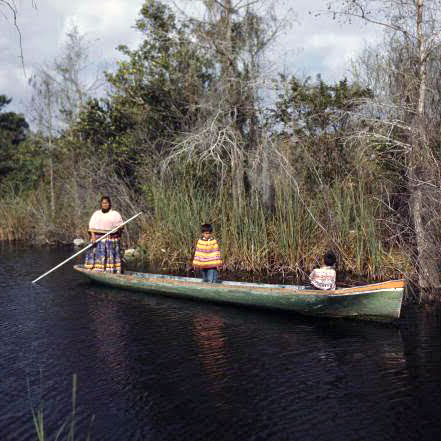
For generations, Florida’s waterways have connected Seminole communities, providing routes through the rivers, marshes, and wetlands of the Everglades. Before modern roads crossed South Florida, dugout canoes were an important means of transportation.
Traditionally made from cypress logs, these canoes required patience, skill, and a deep understanding of wood. Canoe makers began by selecting a suitable tree and preparing the log. They then used controlled fire to burn away the wood inside, gradually hollowing the trunk. Axes and other hand tools shaped the outside and refined the interior. The maker had to remove enough wood to create a usable vessel while leaving the sides strong and even.
The finished canoes were designed for South Florida’s shallow waters. Rather than relying only on paddles, Seminole travelers often used long poles to push against the shallow bottom, maneuvering through marshes and narrow channels. Canoes could carry individuals on hunting trips or transport families and their belongings. They also provided access to fishing areas, hunting grounds, and resources found throughout the wetlands, making them valuable tools for daily life.
Canoe making reflects generations of knowledge passed down through families and tribal elders. The craft required an understanding of local trees, water conditions, and the skills needed to build a dependable vessel. Although changing ways of life have reduced the canoe’s everyday role, it remains an important expression of Seminole history, ingenuity, and cultural knowledge.
Share Article: