Historically St. Pete Podcast | Vanessa Wheeler
Historically St. Pete: How First United Methodist Church became a downtown St. Pete landmark
Featured in St. Pete Rising – Originally published August 25, 2026
Historically St. Pete is a monthly column on St. Pete Rising written by Rui Farias, Executive Director of the St. Petersburg Museum of History, which covers everything from the legend of underground mobster tunnels to the buildings and people that created the Sunshine City.
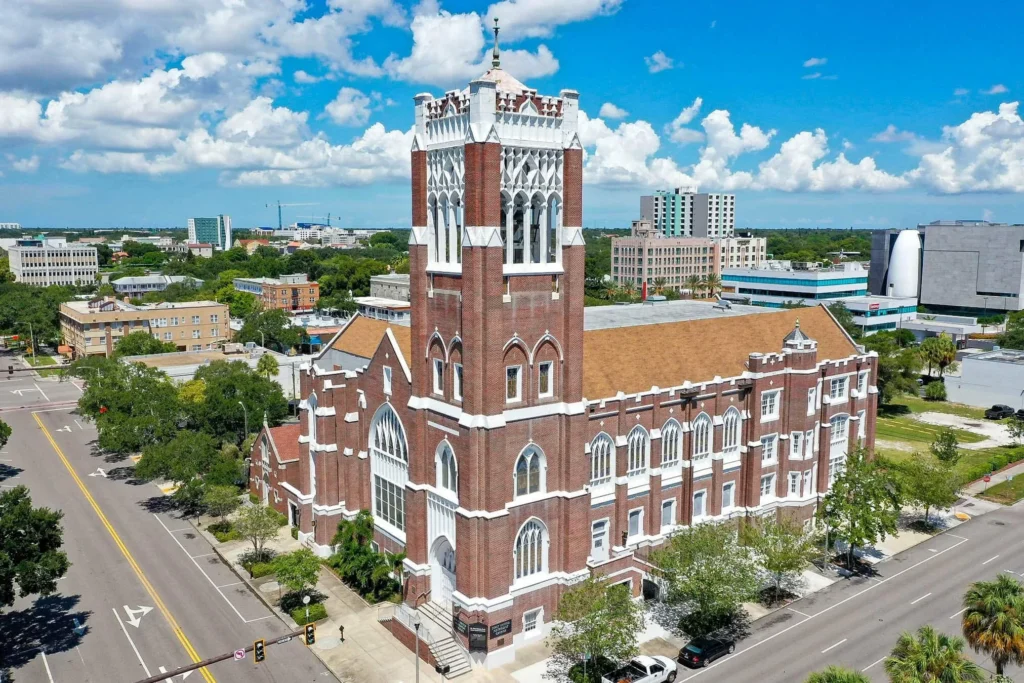
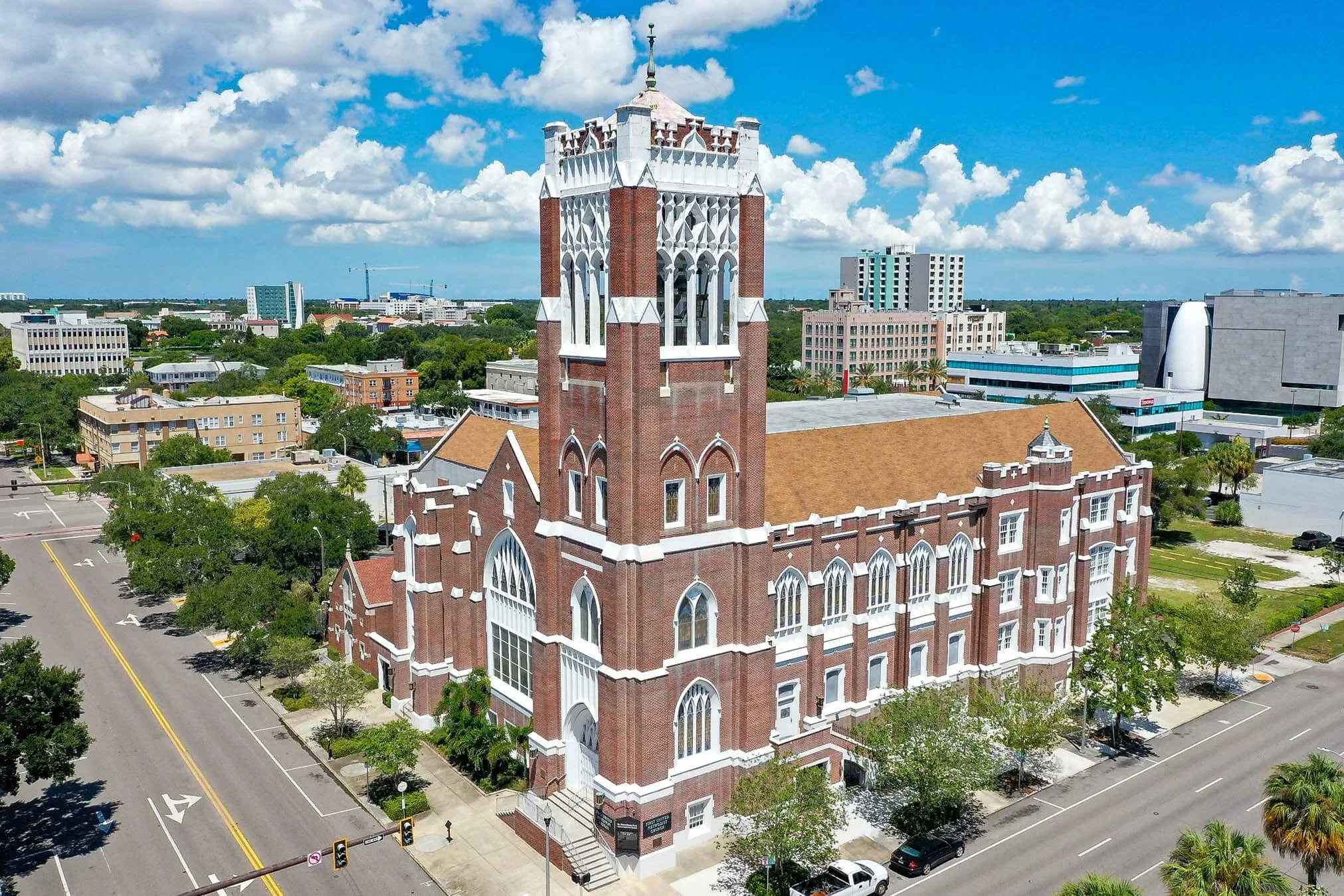
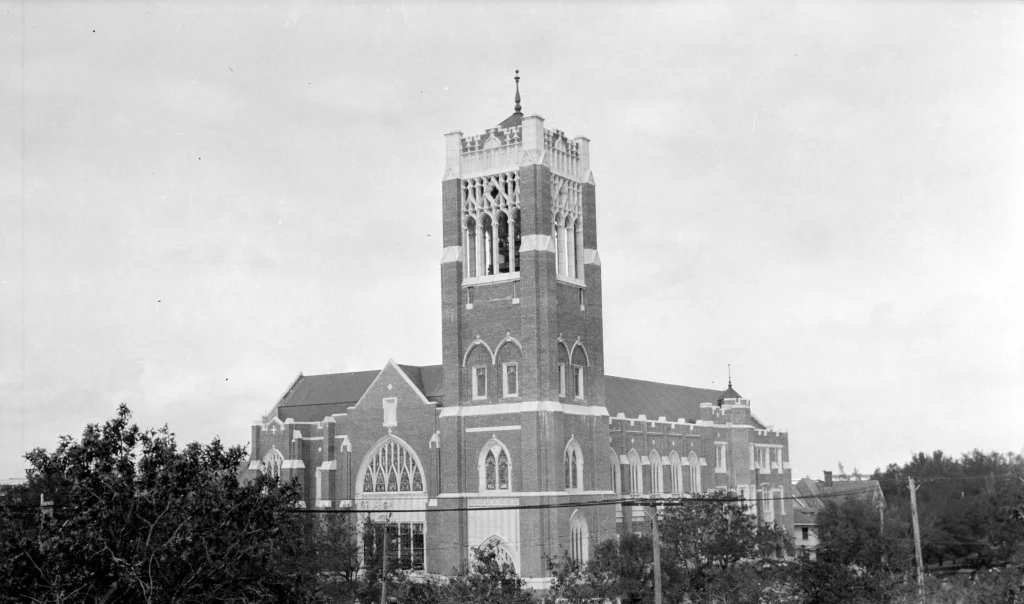
This month, we explore the history of First United Methodist Church, a nearly 140-year-old congregation whose 100-year-old Gothic Revival sanctuary at 212 3rd Street North remains one of downtown St. Petersburg’s most recognizable landmarks.
In June 1888, the same month that the “Mattie” chugged down a narrow-gauge Orange Belt Railway and into the lower Pinellas Peninsula, a small group of Methodists gathered in various homes for church services.
St. Petersburg didn’t yet exist, and the hundred or so pioneering residents of this sun-kissed, rattlesnake-infested, orange-grove-filled land took it upon themselves to worship as best they could.
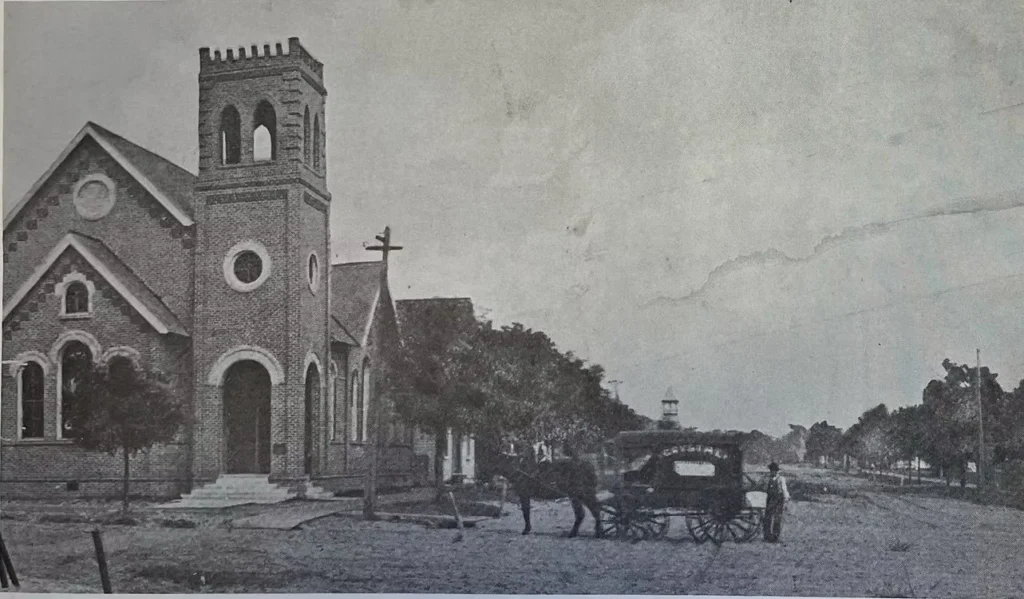
The following year, in 1889, when the Detroit Hotel and Railroad Pier opened, St. Petersburg saw signs of growth. A pastor was appointed, and First United Methodist was born. Two years later, in 1891, the congregation opened its first church on Central Avenue and 7th Street at a cost of $1,100.
The city’s growth continued, as did First United Methodist’s congregation. In 1901, the church structure was physically moved to the corner of 2nd Avenue North and Third Street, at what is now 212 3rd Street North. A new brick church was constructed in 1905. By 1910, the city boasted a population of 1,575 residents.
Then came the Roaring ’20s.
St. Petersburg experienced unprecedented growth in the 1920s, and it wasn’t only hotels, gin joints, and Mediterranean-styled mansions. New churches began rising throughout the city, and established churches such as First United Methodist began considering expansion or new structures altogether.
The congregation hired architect James Baldwin to design an impressive structure in the Late Gothic Revival style that also portrayed a strong English Gothic influence. This was a far cry from the Mediterranean Revival style gripping St. Petersburg.
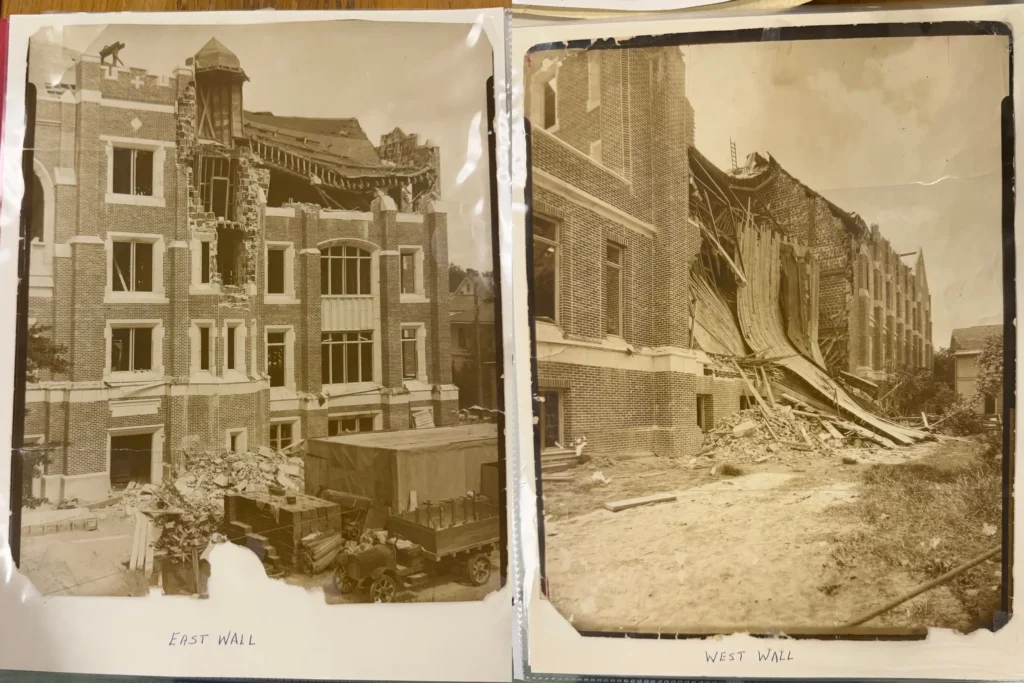
Construction cost $450,000 and began in 1924. The church was completed under engineer Charles C. Whitaker after sections of three walls collapsed during construction. Red brick walls, a soaring bell tower, pointed arches, stone tracery, stained glass, and a steeply pitched roof created one of the most remarkable buildings in the city.
The bell tower rises 144 feet into the sky, reinforcing the building’s Gothic character. The original tower housed a 10-bell carillon. The bronze bells were cast by the Meneely Bell Company of New York, with the largest weighing 2,208 pounds.
Originally played through manual levers, the carillon was converted to an electronic-keyboard version in the mid-1960s. The 1925 Austin organ had 1,541 pipes, which has expanded to 2,979 pipes in the current organ.
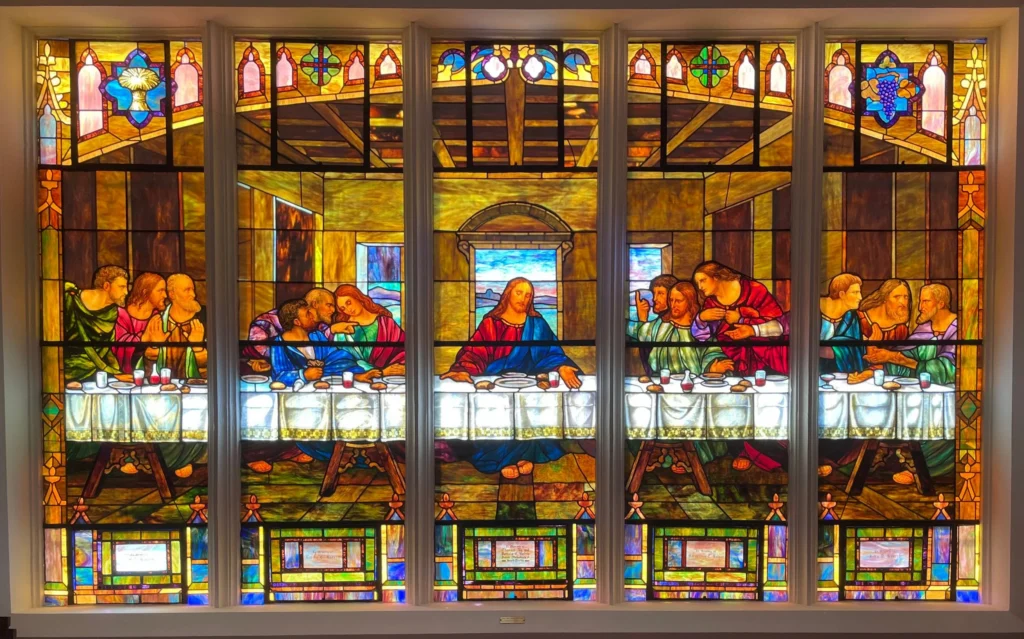
Even though leaded stained-glass windows are located on the east and west walls of the church, facing Williams Park to the south is a monumental stained-glass window designed by the George Hardy Payne Studios of Paterson, New Jersey.
Depicting Leonardo da Vinci’s The Last Supper, the breathtaking glass is designed in the Tiffany style with multiple layers of opalescent and faceted glass. It remains the sanctuary’s most iconic feature. The light passing through the stained glass creates a multicolored light show in the sanctuary during the day.
St. Petersburg’s economic bust of 1928, followed by the Great Depression, brought financial hardship to the city’s churches. In a city once said to have more churches and banks per capita than any other in the nation, many of both closed their doors within just a few years.
First United Methodist struggled but survived due to generous gifts and the sacrifice of its congregation.
During World War II, when more than 100,000 service members trained in St. Petersburg, the sanctuary became a home away from home for many soldiers.
The 1950s brought a congregation that numbered 3,000, the area’s first televised church service, and finally, air conditioning.
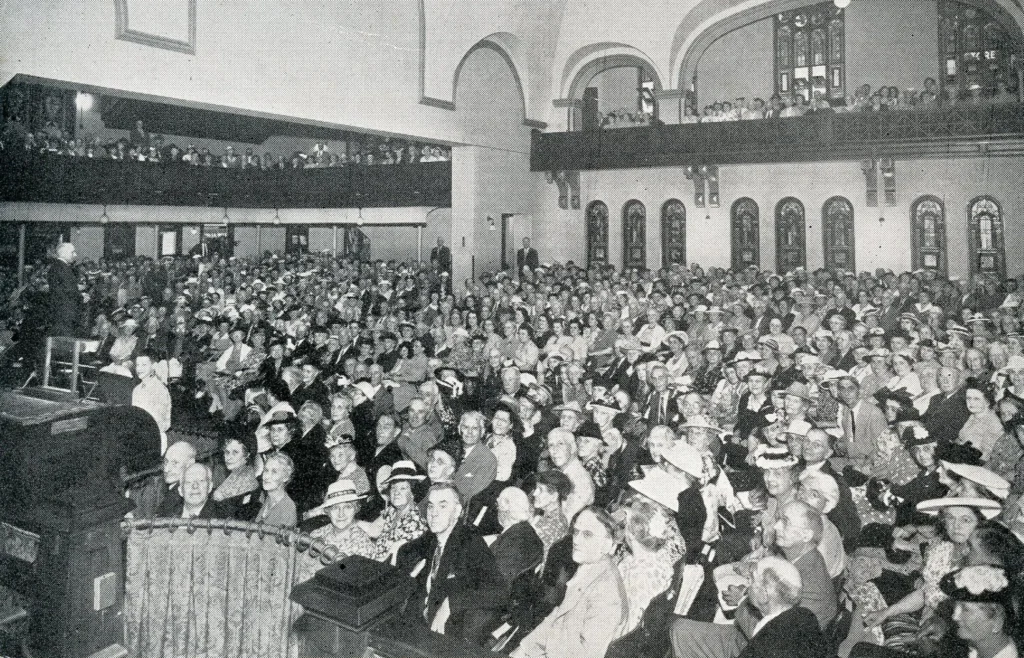
First United Methodist also made it to the big screen in 1985 when Hollywood came knocking and filmed the wedding scene from the movie Cocoon in the sanctuary.
Added to the U.S. National Register of Historic Places on September 13, 1990, First United Methodist continues a century of song from its historic bells in 2026.
Share Article: