On October 16, 1863, the American Civil War reached Tampa Bay in a coordinated Union Navy raid designed to disrupt Confederate blockade running.
During the war, Confederate vessels attempted to slip past the Union naval blockade to transport valuable supplies, including cotton, to markets abroad. The Union Navy targeted two ships operating on the Hillsborough River: the steamer Scottish Chief and the sloop Kate Dale.
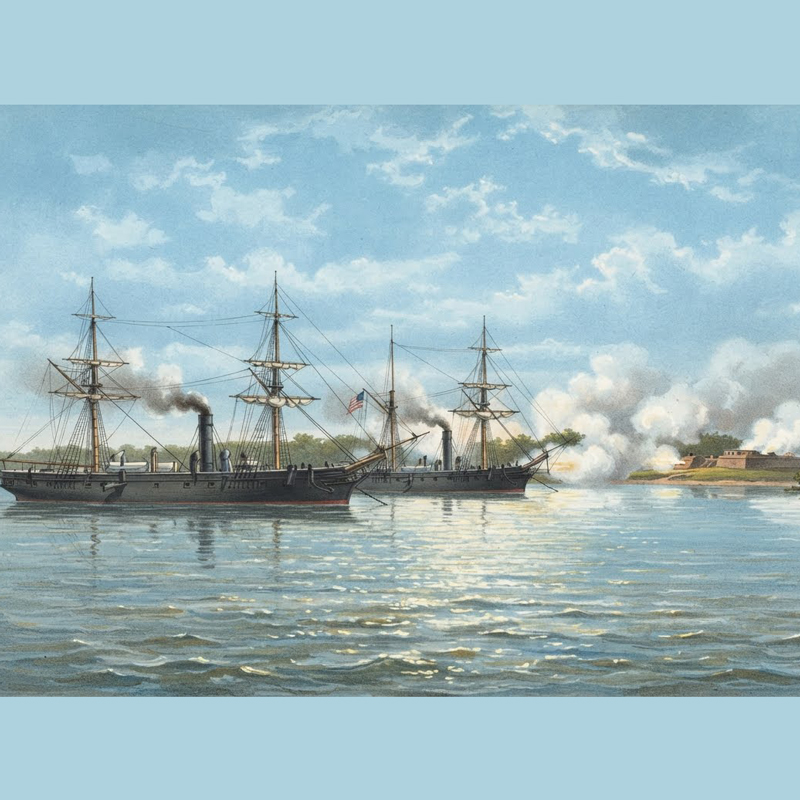
The operation began when the USS Tahoma and USS Adela approached Tampa and opened fire on Fort Brooke. The bombardment was a diversion intended to draw Confederate attention away from the real objective.
Under cover of darkness, approximately 100 Union sailors landed along the bay and marched about 14 miles through difficult terrain toward the Hillsborough River. Guided by a local Union supporter, the raiding party located the two blockade runners and set them ablaze. Both vessels were carrying cotton intended for the Confederate trade. (U.S. Navy Department; National Park Service)
The mission, however, came at a cost. As the Union sailors returned to their landing point, Confederate forces attacked. The raiders suffered casualties, including men killed, wounded, and captured, before the surviving sailors reached their ships.
The raid was a significant blow to Confederate shipping in the Tampa area, demonstrating that vessels hidden upriver were vulnerable to Union attacks. It also brought the war directly to the community surrounding Fort Brooke, now part of downtown Tampa.
Although Tampa remained far from the war’s major battlefields, its strategic Gulf Coast location made it part of the struggle over trade, supplies, and control of the waterways. On that October day, Tampa Bay became the setting for a daring operation that combined naval bombardment with a long, dangerous march inland.
Share Article: