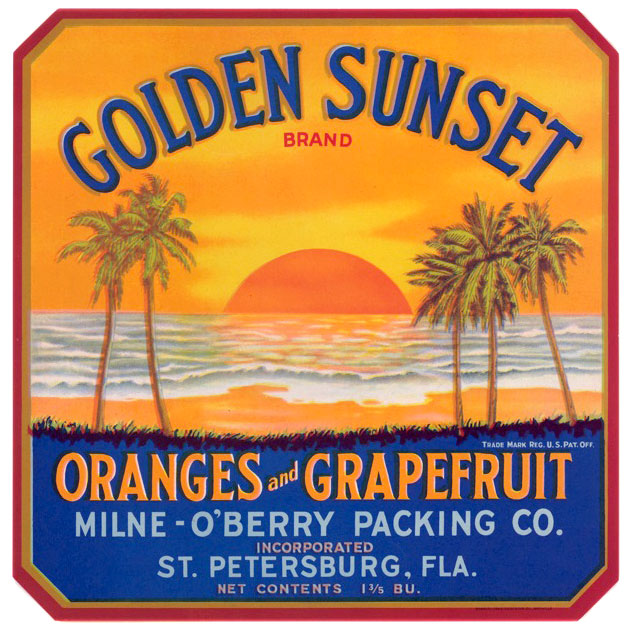
Beginning in the late nineteenth century, colorful paper labels transformed ordinary wooden citrus crates into miniature works of art. Measuring about 10 by 10 inches, they identified the grower and brand while capturing the attention of produce buyers nationwide. Soon, they became one of Florida’s most recognizable forms of advertising.
Printed using vibrant stone lithography, the labels featured bright oranges, palm trees, tropical birds, blue skies, and smiling families. They sold more than fruit. They sold the idea of Florida as a warm, sunny paradise. Millions of northern families first imagined a Florida vacation after seeing these colorful designs arrive with holiday citrus shipments.
As packaging evolved after World War II, cardboard boxes gradually replaced wooden crates, and the labels disappeared from everyday use. What was once considered disposable advertising is now prized as a unique form of American commercial art.
Today, these vibrant labels offer a glimpse into how Florida marketed itself to the world, reminding us that long before social media, a simple orange crate carried the Sunshine State’s story across America.
See why our new exhibit has been nominated for Best Museum Exhibit in Creative Loafing’s Best of the Bay 2026! Presented by BayFirst National Bank, Wish You Were Here: The Art of Selling Sunshine explores the people, places, and promotions that made St. Petersburg a world-famous destination.
Share Article: