Seminole People of Florida
Presented by
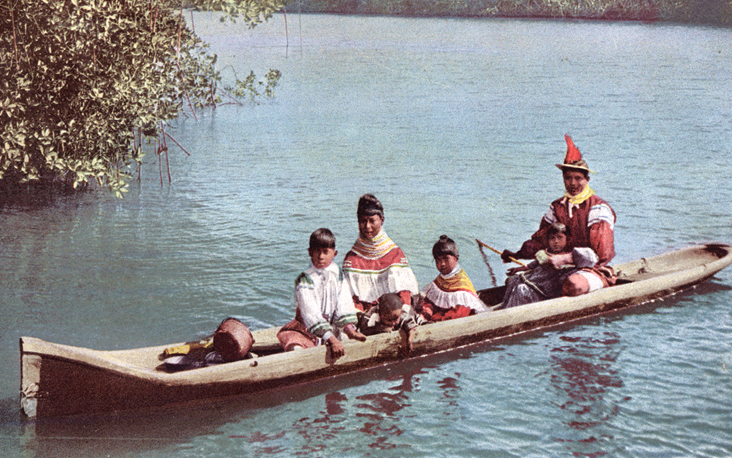
For more than three centuries, the Seminole people have shaped Florida’s history through resilience, adaptation, and a deep connection to the land. Their ancestors arrived in the 1700s and early 1800s, coming from present-day Alabama and Georgia. Though outsiders labeled them simply as “Creeks,” these groups spoke different languages, lived in independent towns, and eventually formed a new identity in Florida. By the mid-1700s, they were known as Seminoles, a name rooted in a Spanish word often translated as “free,” a reflection of their independent spirit.
The nineteenth century brought hardship as the United States waged three wars against them. Most were forced west, but fewer than 200 survived in Florida, retreating deep into the Everglades. From there, they built a life in chickee camps, hunted and farmed, and traded with frontier settlers.
As tourism expanded in the twentieth century, Seminole families demonstrated traditional skills, created crafts, and introduced visitors to patchwork clothing, a style they developed around 1917. Over time, reservations were established, tribal governance formed, and new economic opportunities grew. Today, the Seminole Tribe of Florida thrives as a sovereign nation, preserving its culture while shaping its own future.
This traveling exhibit is on loan from the Museum of Florida History.