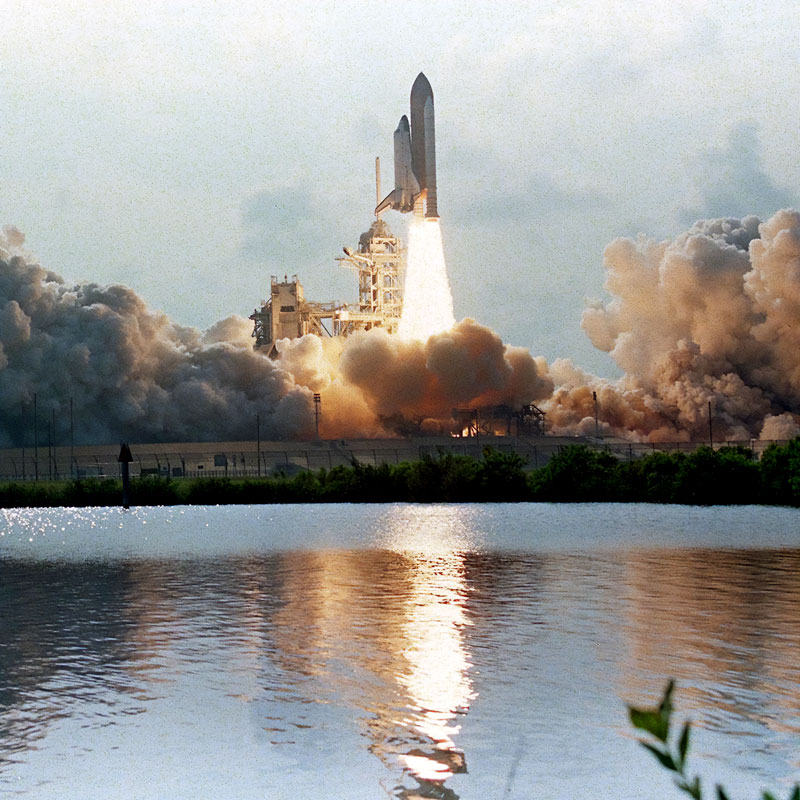
On September 30, 1994, Space Shuttle Endeavour lifted off from Kennedy Space Center on STS-68, its seventh journey into space. Six astronauts headed into orbit for an 11-day mission carrying the second Space Radar Laboratory, part of NASA’s Mission to Planet Earth program.
The laboratory used radar and other instruments to study Earth’s surface and atmosphere. Flying the equipment during a different season than the first Space Radar Laboratory mission allowed scientists to compare environmental changes around the globe. During the mission, the instruments collected 60 terabits of data and made more than 900 radar observations.
But the story of space technology from this era also has a St. Petersburg connection.
NASA and Johns Hopkins University researchers had developed an ingestible thermometer that could continuously monitor core body temperature. Human Technologies Inc., based in St. Petersburg, commercialized the technology as the CorTemp system.
The technology found an important application much closer to home. In 1993, Human Technologies launched a HAZMAT Stress Alert Program, and it first tested the system with the St. Petersburg Fire Department, part of the Pinellas County Hazardous Materials Response Team. Firefighters wore protective gear while the ingestible sensor monitored their core temperatures.
It was a remarkable example of technology moving in both directions, from the challenges of spaceflight to the challenges faced by local first responders.
Endeavour completed 182 orbits and traveled 4.7 million miles before landing at Edwards Air Force Base in California on October 11.
Share Article: