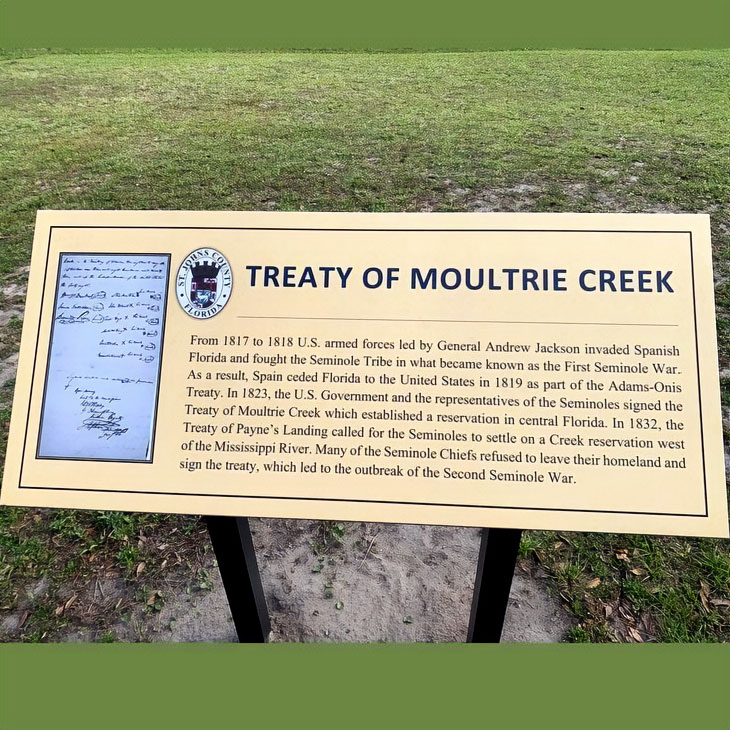
On September 18, 1823, the United States and the Seminole nation signed the Treaty of Moultrie Creek near St. Augustine. This agreement marked a devastating turning point, forcing the Seminoles to surrender nearly 24 million acres of Florida land.
In return, they were restricted to an inland reservation of four million acres in central Florida, completely cutting off their vital coastal trading networks.
The U.S. government promised annual payments, livestock, farming tools, and a year of food to aid the transition. However, the assigned reservation land was notoriously poor for agriculture, and the promised federal assistance arrived slowly.
Many Seminoles understandably resisted abandoning their ancestral homes for barren territory.
Rather than easing tensions, this treaty fueled a growing federal effort to remove Native peoples from the region completely. Within a decade, intense pressure from the Indian Removal Act of 1830 sparked the Second Seminole War in 1835.
Ultimately, the legacy of Moultrie Creek is not just one of broken promises, but a testament to Seminole resilience and their enduring determination to remain in Florida.
Share Article: